Protein Ingestion and Endurance Exercise: A Closer Look at the Science

Michael J. Saunders, PhD, School of Kinesiology and Recreation Studies, James Madison University

INTRODUCTION

Carbohydrates and fats are the primary fuels metabolized during endurance exercise. However, during prolonged exercise, protein can contribute 5-10% of total energy demands (2, 4) and this contribution can increase under conditions of low glycogen availability (7, 14).  Because this contribution is considerably less than carbohydrates and fats, exercise scientists have historically minimized the importance of protein for endurance athletes. However, protein’s contribution is not inconsequential as subtle changes in metabolism can impact training and performance.

PROTEIN METABOLISM & EXERCISE

The importance of protein ingestion during recovery from exercise has become widely accepted in the sports nutrition field but the ingestion of protein during exercise is less appreciated. From a metabolic perspective a small amount protein consumed during exercise will increase protein oxidation. The oxidation of this protein for energy can alter substrate utilization and potentially spare blood glucose and/or muscle glycogen as well as modulate protein turnover (i.e. sum of protein synthesis and breakdown). To this end, Koopman et al. (6) reported two-fold increases in protein oxidation when protein was added to a carbohydrate beverage during prolonged exercise. Furthermore, ingestion of protein intake during exercise improved protein balance by stimulating whole body protein synthesis and minimizing breakdown. By contrast, whole body protein balance remained negative when only carbohydrate was ingested. 

Colombani and associates (3) observed that protein was absorbed and partially oxidized during marathon running with carbohydrate plus protein (CHO+Pro) ingestion.  Thus, carbohydrate/protein ingestion may increase the total fuel availability to the working muscles beyond levels attainable with carbohydrate alone. In support of this hypothesis, we observed significantly improved power output and performance times in the late-stages of a cycling time-trial with CHO+Pro ingestion during exercise when compared to a carbohydrate (CHO) beverage (12).  Both beverages contained equal carbohydrate content, which was provided at the upper-limit of exogenous carbohydrate oxidation (>60g/hr), suggesting that these performance benefits could not have been elicited with higher carbohydrate content. 

RECENT PERFORMANCE STUDIES

In the past few years a number of studies have shown great promise for the role of supplemental protein to improve endurance performance.  Ivy et al. (5) compared the effects of consuming varied sports beverages during exercise on cycling time at 85% VO2max following three-hours of varied-intensity, sub-maximal cycling.  Cyclists completed significantly longer time-to-exhaustion when consuming a CHO+Pro beverage (26.9±4.5 min) than a CHO beverage (19.7±4.6 min), with both beverages outperforming a placebo (12.7±3.1).  Our Human Performance Laboratory compared cycling time to exhaustion at 75% VO2max between CHO and CHO+Pro beverages (10).  Cyclists were able to ride 29% longer when receiving CHO+Pro (106.3±45.2 min) than CHO (82.3±32.6 min).  Similarly, we recently reported significant endurance improvements in both male and female cyclists when CHO+Pro gels were ingested during exercise (11).  

It is plausible that increased availability of total calories may in part contribute to the performance improvements observed in the CHO+Pro trials mentioned above. Although we cannot discount the input of the additional calories in the CHO+Pro trials, they do not completely explain the additional energy expended during the prolonged performance time. In other words, the small additional calories ingested cannot completely account for the significantly greater energy expenditure- which suggests mechanisms other than energy alone may be a factor.

RESEARCH DESIGN & PERFORMANCE

A recent study from VanEssen & Gibala (13) reported no differences in 80-km time-trial performance between cyclists receiving CHO and CHO+Pro beverages. These investigators hypothesized that the performance benefits reported by Ivy et al. (5) and Saunders et al. (10) were a result of time-to-exhaustion being used as a performance measure.  Based on their findings they suggested that athletes in competition (i.e. time to complete a specific distance) would not derive performance enhancements with CHO+Pro ingestion. 

Time-to-exhaustion protocols were criticized by VanEssen & Gibala (13) due to the lack of application to real-world competition. However, improved endurance is a common element throughout sport, as exercisers and athletes alike want the ability to “go farther and longer”. Time-to-exhaustion has been widely used as a measure of endurance performance because it is closely related to glycogen depletion. As a result, this measure is likely to maximize performance differences in treatments that influence metabolic aspects of fatigue. 

VanEssen & Gibala’s study reported overall 80-km performance, and time-splits for each 20-km segment of their trial, but did not report data during the latest stages of exercise, where the potential benefits of performance from CHO+Pro beverages would be more apparent, and most important to the athlete.  In addition, because the relative performance benefits of CHO+Pro would be smaller during time-trial protocols (i.e. we have reported 3% improvements in late-exercise time-trial performance versus 13-29% in time-to-exhaustion), it is critical that investigators utilize adequate statistical power to assess these subtle, but important differences in performance.  However, due to the small sample size (10 subjects) in the study by VanEssen & Gibala (13), the statistical power to observe a 2-minute difference in time-trial performance was approximately .32* (8); far lower than the .80 recommended by most scientific journals for publication of findings suggesting no differences between treatments. In other words, their study design lacked the statistical power to detect differences in performance between beverages, even if they were quite large.   This same limitation in statistical power applies to at least two other recent studies that reported no differences in subsequent exercise performance with CHO+Pro ingestion (1, 9).  Thus, it is important for those investigating the efficacy of CHO+Pro interventions to utilize protocols that maximize the ability to detect performance differences and/or use adequately large sample sizes to observe more subtle differences in performance time-trials.

CONCLUSIONS

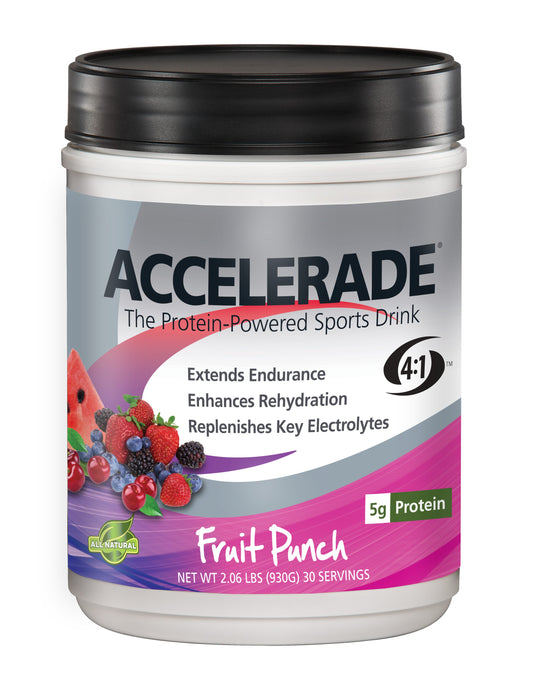
In summary, the evolution of research examining sports drinks over time has firmly established the importance of fluid replacement during exercise to enhance performance. However, the inclusion of only carbohydrate-electrolytes in the formulation is becoming increasingly challenged by scientific research in this area. A growing body of evidence supports the addition of protein to carbohydrate-electrolyte sports beverages used during endurance exercise as well as for recovery. The proposed benefits of CHO+Pro beverages include increased endurance performance, enhanced rehydration, attenuations in markers of muscle damage and improvements in subsequent muscle function. To provide athletes with specific information regarding the efficacy of CHO+Pro beverages, it is important to examine their usage during sport-specific studies.  In addition, a critical step in the continued understanding of CHO+Pro beverages is establishing the mechanisms to explain their efficacy. 

*Assumptions: standard deviation = 9 minutes (VanEssen & Gibala, 2006); Assumed intra-class correlation between repeated time trial measures: r= 0.9; Difference between treatments = 2 min, an "effect" of 0.7 SD units was calculated.  Assuming a 2-tailed alpha of P<0.05 

REFERENCES

  1. Betts JA, Stevenson E, Williams C, Sheppard C, Grey E, and Griffin J. Int J Sport Nutr Exerc Met 15: 590-609, 2005.
  2. Brooks G and Mercies J. J Appl Physiol 76: 2253-2261, 1994.
  3. Colombani PC, Kovacs C, Frey-Rindova P, Frey W, Langhans W, Arnold M, and Wenk C. Int J Sport Nutr Exerc Met 9: 181-201, 1999.
  4. Dohn GL. Exerc Sports Sci Rev 14: 143-173, 1986.
  5. Ivy J, Res PT, Sprague RC, and Widzer MO. Int J Sport Nutr Exerc Met 13: 388-401, 2003.
  6. Koopman R, Pannemans DLE, Jeukendrup AE, Gijsen AP, Senden JMG, Halliday D, Saris WHM, van Loon LJC, and Wagenmakers AJM. Am J Physiol 287: E712-720, 2004.
  7. Lemon PW and Mullin JP. J Appl Physiol 48: 624-629, 1980.
  8. Lipsey MW. Design Sensitivity: Statistical Power for Experimental Research. Newbury Park, CA: Sage Publications, 1990.
  9. Millard-Stafford M, Warren GL, Thomas LM, Doyle JA, Snow T, and Hitchcock K. Int J Sport Nutr Exerc Met 15: 610-624, 2005.
  10. Saunders MJ, Kane MD, and Todd MK. Med Sci Sports Exerc 36: 610-624, 2004.
  11. Saunders MJ, Luden ND, and Herrick JE. J Strength Cond Res [In Press], 2007.
  12. Saunders MJ, Luden ND, Pratt CA, and Moore RW. J Int Soc Sports Nutr 3: S20, 2006 [Abstract].
  13. Van Essen M and Gibala MJ. Med Sci Sports Exerc 38: 1476-1483, 2006.
  14. van Hall G, MacLean DA, Saltin B, and Wagenmakers AJ. J Physiol 494: 899-905, 1996.

Accelerade Works with You

Yes, you read that right. Learn how Accelerade refines the well-oiled machine you are.

Find out more

What's This About a Ratio?

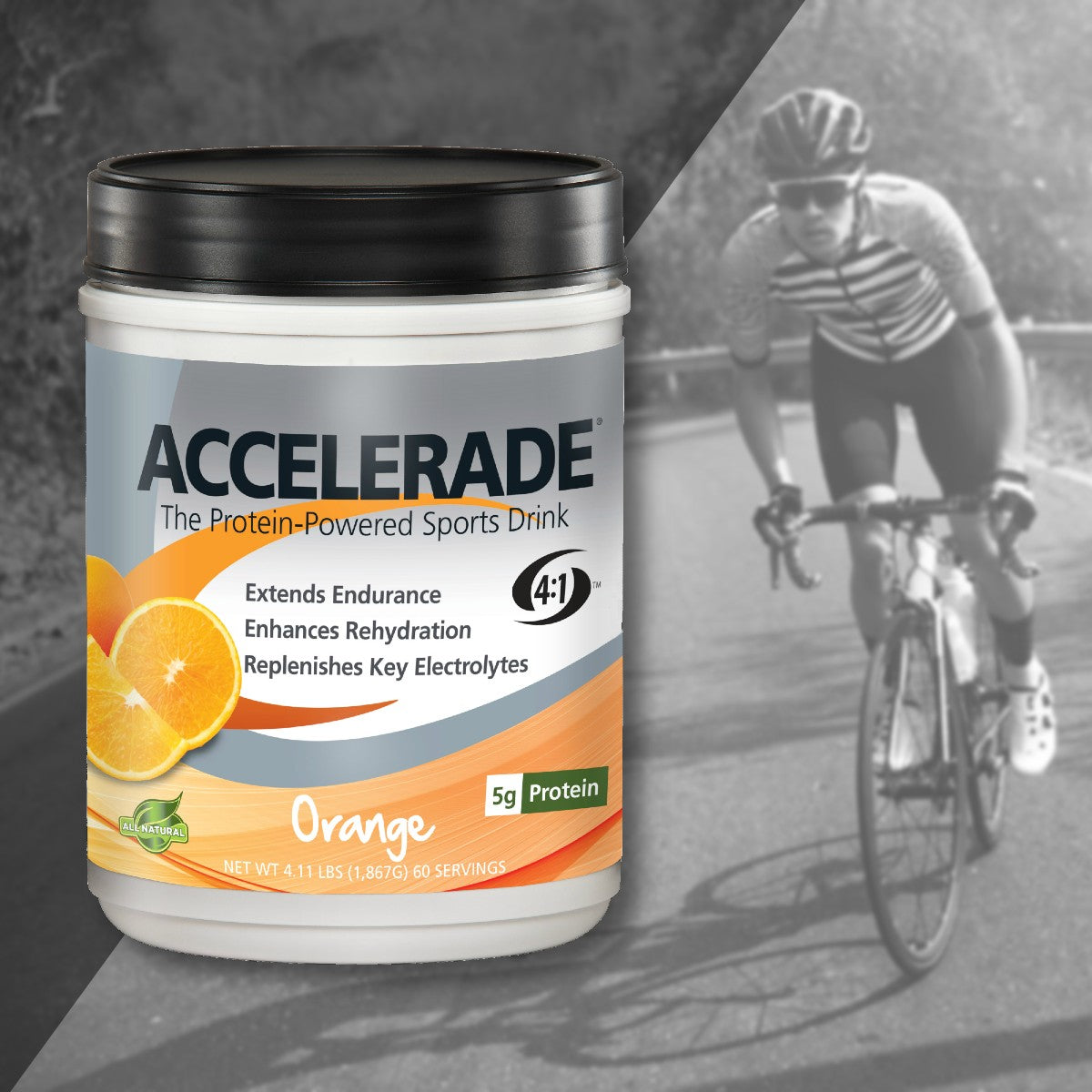
Accelerade works because it provides the fuel that muscles need. Learn what the 4:1 ratio is and why you might just call it your secret weapon.

Find out more